whoami // the long version

Business first. Engineering second. Product, always.

Fifteen years, three careers, one thread I only saw looking backwards: I keep turning unclear problems into working software — a business that had to exist before anyone wrote code for it, trade-permit systems, client documents, other people's private thoughts. This page is how that happened.

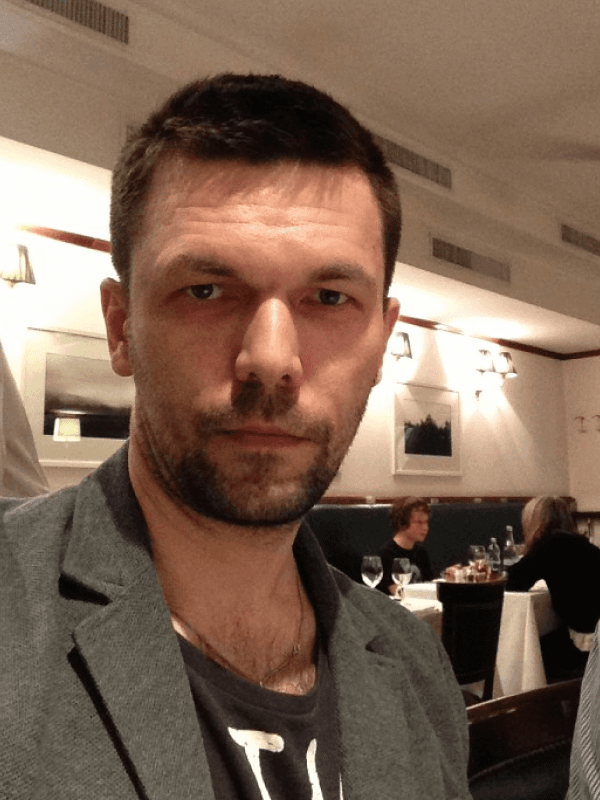
Anatolii Kirsantov, looking into the camera
UTC+6Bishkek — working globally

Four acts

the arc, not the CV
Act I — Business2011–2018

I sold before I could build

Founded Addqd, then Pinflorist in Riga; ran business development at ZenMall; art-directed at Trade&Chat. Seven years on the commercial side taught me the thing engineering school can't: what a problem costs before anyone writes code to fix it. When I sit with a government officer or a firm's partner today and listen for the expensive problem — that's this act talking.

Act II — Engineering2017–2022

London fintech, where mistakes cost money

Built and rebuilt frontends for crypto and investment products — Nebeus, InvestEngine, Vinza — then a React Native product from scratch at iBride. Finance is a good teacher: correctness isn't a preference, it's the product. Alongside the work, a Computer Science degree at the University of London (2020–2024), because self-taught needed a foundation under it.

Act III — Scale2022–2025

Living systems, not greenfield

Senior engineer at Social Discovery Ventures: modernising a legacy platform serving real traffic — component systems, performance, launching a new product on the core without stopping the old one. Greenfield is easy; keeping a living system alive while you rebuild it is the actual skill. It's also where rescue work stopped scaring me.

Act IV — Product & AI2025–now

Idea to production, twice over

Two roles, one shape. At Kyrgyz Single Window, I joined as head of IT, moved into frontend architecture, and now lead the AI work — systems for foreign-trade participants and the agencies that issue their permits, built on state infrastructure. As founder of Open Cradle, I'm building an on-premise agent platform: law firms, clinics, family offices — teams whose documents legally cannot touch a cloud API.

Both started the same way: a specific, badly-defined problem, turned into a working system. The data-can't-leave constraint happened to be part of both — it's the proof this approach holds up under real limits, not the whole of what I do.

The record

dates & titles, compressed
2025 – now
Kyrgyz Single Window · IT lead → frontend architect → AI team lead
2025 – now
Founder — Open Cradle · on-premise agent platform
2022 – 2025
Senior Software Engineer — Social Discovery Ventures · platform modernisation, new product launch
2018 – 2022
Frontend Engineer — iBride · React Native product from scratch, legacy migration
2017 – 2020
Frontend Engineer — London · Nebeus, InvestEngine, Vinza — fintech & crypto
2011 – 2018
Founder & business roles · Addqd, Pinflorist, ZenMall, Trade&Chat
2020 – 2024
BSc Computer Science — University of London

Live products and experiments — on the projects page.

How I actually work

tested on real systems
P-01

The problem before the model

Most failed AI projects chose the technology first. I interview the people who do the work before I open an editor — sometimes the answer is a form redesign, not a model.

P-02

Correct beats fast where it counts

In demos, iterate loud and quick. In regulated systems, deterministic rules decide and every claim cites a source. Knowing which mode you're in is the skill.

P-03

Ship into reality, then measure

A prototype your stakeholders actually use teaches more than a quarter of planning. Real usage data settles arguments that opinions can't.

P-04

Some projects shouldn't start.

If software won't fix the problem, that's what the recommendation says, with the reasoning.

next step

Get in touch